
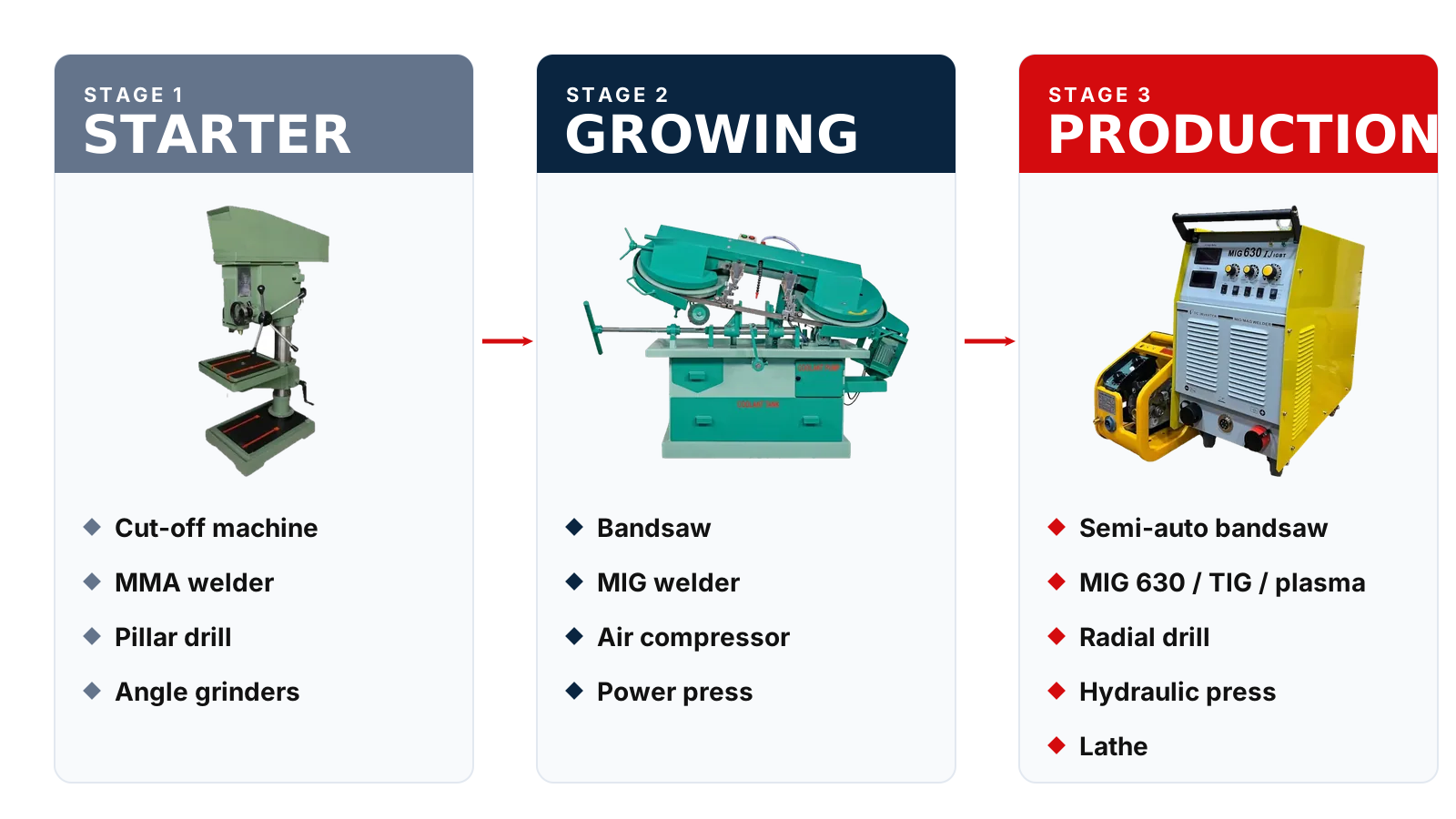
To start, you need a way to cut (a cut-off machine or bandsaw), a way to join (a welding machine), a way to make holes (a pillar drill), a way to finish (angle grinders) and a solid bench and vice. As work grows, add a bandsaw, a better welder, an air compressor and a power press. Production shops add radial drills, larger presses and plasma cutting.
In this guide 11 sections
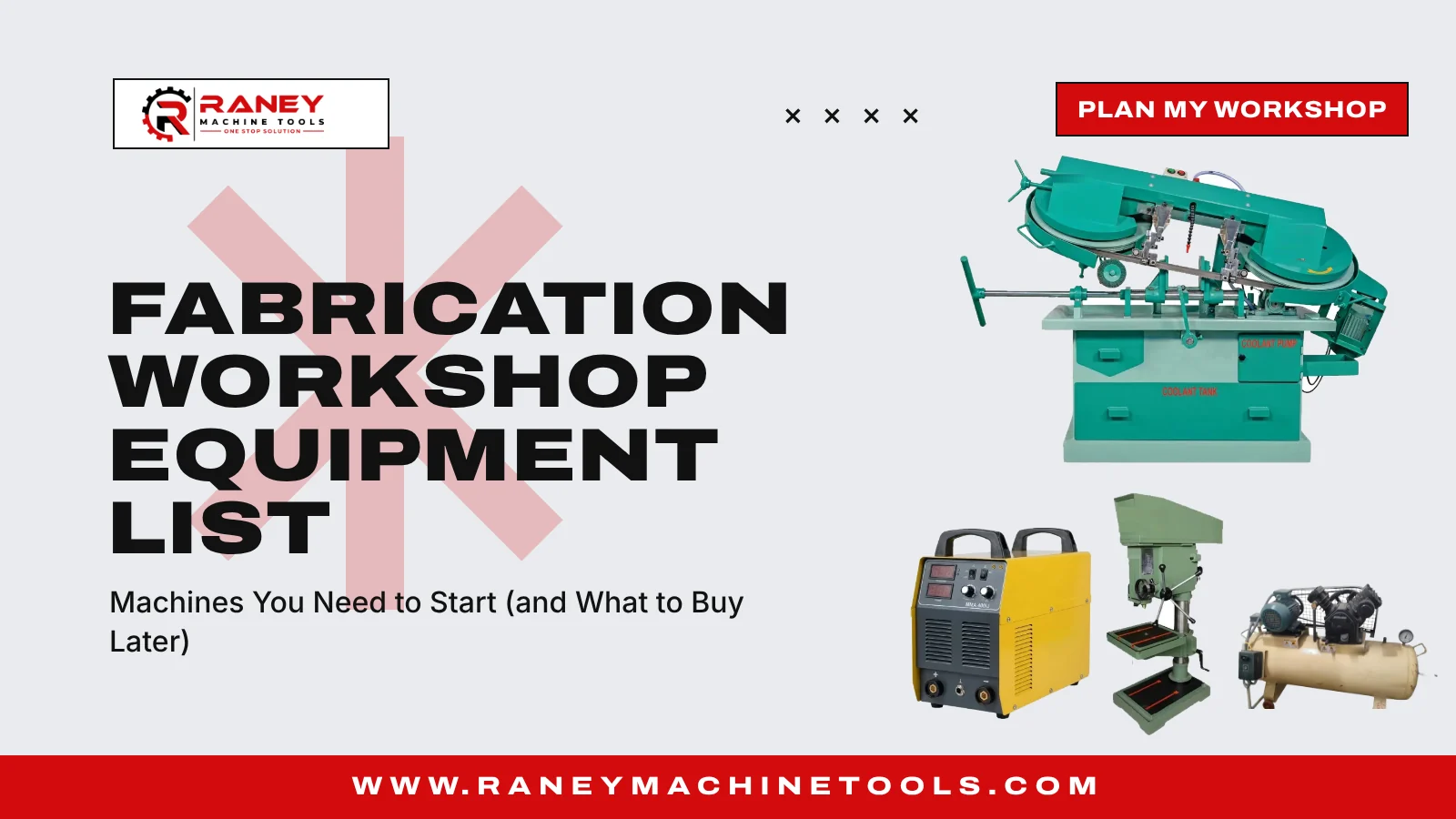
Every fabrication business we have seen grow started the same way: one shed, a few machines and an owner doing half the work with their own hands. The ones that grew fastest didn't buy the most machines on day one. They bought the right few, kept them busy, and added the next machine when the work demanded it.
This guide is the list we would give a friend starting a fabrication workshop in Gujarat. It is split into three stages, so you can start lean and grow without buying anything twice. We also cover the things outside the machines that new owners often forget: power supply, layout, safety and registrations.
If your work leans more towards machining (turning, milling, grinding), our guide to lathe vs milling vs drilling vs grinding covers that side of the shop.
Before the Machines: Decide What You Will Make
"Fabrication" covers everything from gates and grills to structural steel, sheet metal enclosures, conveyor frames, machine guards and tanks. The machines overlap, but the emphasis changes:
- Structural and heavy fabrication: cutting sections, drilling big holes, heavy welding
- Sheet metal work: punching, bending, spot welding, finishing
- General job work: a bit of everything, in small batches
Write down the five jobs you expect to do most. Then check every machine on the list against them.
Stage 1: The Starter Shop
The minimum to take on real work and deliver it properly.
| Need | Machine | Why |
|---|---|---|
| Cutting sections | Cut-off machine (abrasive) | Fast, cheap straight cuts on bars, pipes, angles and channels |
| Joining | Arc (MMA) welding machine | The most forgiving process for new welders; welds outdoors and on rusty steel |
| Holes | Pillar drill, 20 to 25 mm | Accurate holes for bolting and fixing |
| Finishing | Angle grinders | Cleaning welds, bevelling, cutting small pieces |
| Holding | Workbench, bench vice, drill vice | Safe, accurate work starts with good holding |
| Marking and checking | Surface plate or flat table, square, measuring tape | Square frames come from square checking |
Swipe the table sideways to see every column →
From our range for stage 1:
- Arc (MMA) welding machine: the MMA 400IJ is an inverter machine with 40 to 400 A output, weighing just 22 kg, so it moves easily around the shop and to site.
- 20 mm pillar drill, in bench or floor versions, or the 25 mm heavy duty model if your holes are bigger.
- Cut-off machine, angle grinders, bench vice and drill vice from our accessories and tooling.
Stage 2: The Growing Shop
Once regular orders arrive, these machines remove the bottlenecks.
| Need | Machine | Why |
|---|---|---|
| Faster, accurate cutting | Metal cutting bandsaw | Straighter, square cuts with less waste and less noise than an abrasive cut-off |
| Faster welding | MIG (CO2) welding machine | Much faster than stick welding for production on mild steel |
| Compressed air | Air compressor | Air tools, blow-off, spray painting, plasma cutting |
| Bigger holes | 40 mm pillar drill or a radial drill | Flanges, base plates, heavy brackets |
| Sheet work | Small power press | Punching holes and blanking brackets in volume |
Swipe the table sideways to see every column →
From our range for stage 2:
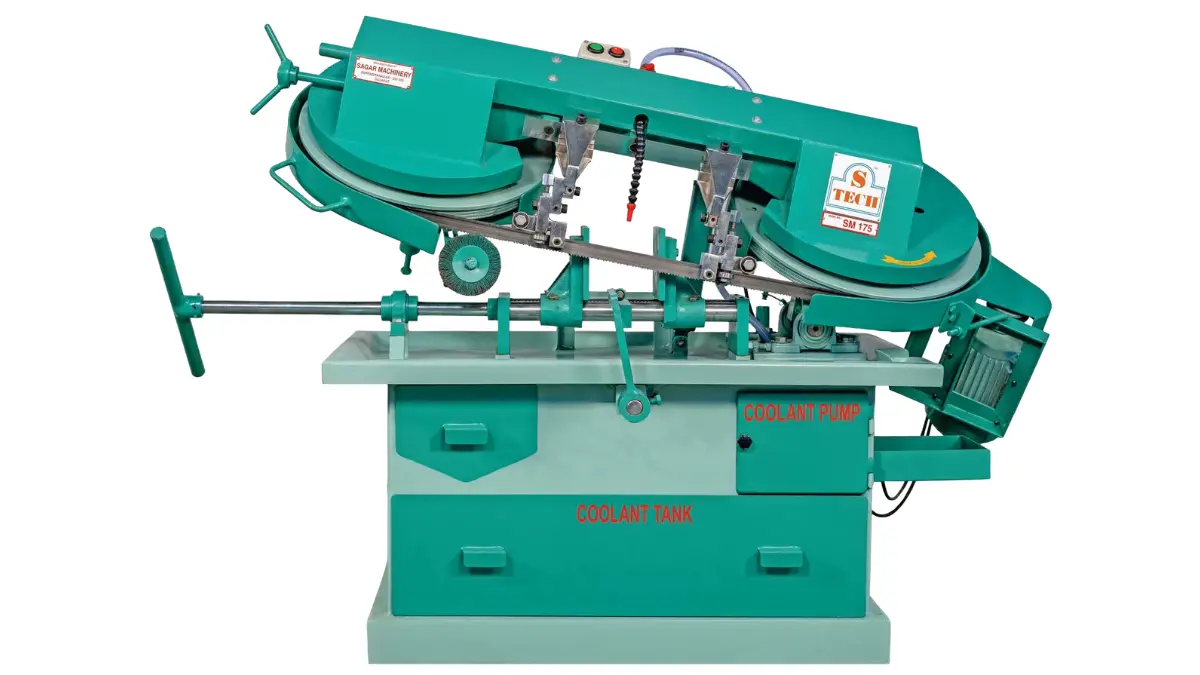
- Metal cutting bandsaws from 175 mm to 600 mm round capacity, plus pivot type manual and semi-automatic models.
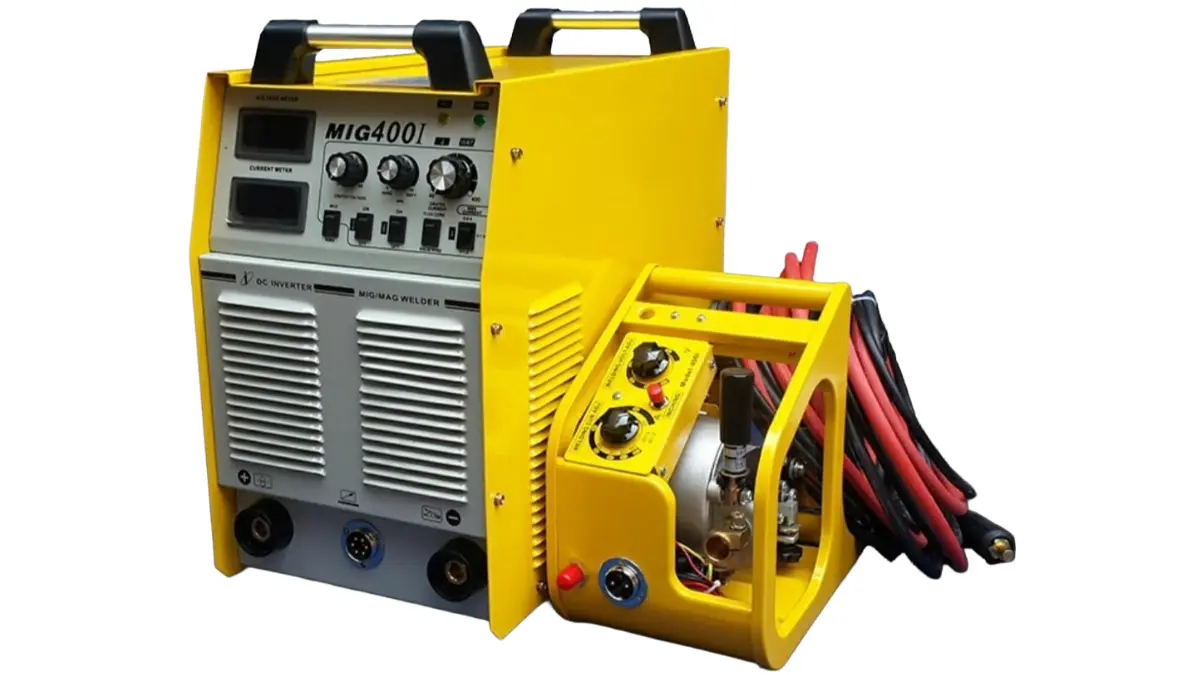
- MIG 400 IJ, which also welds in arc (MMA) mode, so one machine covers both.
- Air compressors from 1 to 50 HP. Our air compressor buying guide shows how to size one for your tools.
- Power presses from 5 ton. Our power press machine guide explains how to work out the tonnage.
Stage 3: The Production Shop
For shops running full shifts, with repeat customers and bigger jobs.
| Need | Machine | Why |
|---|---|---|
| High-volume cutting | Semi-automatic or fully automatic bandsaw | Hydraulic vice, automatic return and blade-break detection for unattended cycles |
| Heavy or continuous welding | MIG 630 (100% duty cycle) | Welds continuously at full output without cooling breaks |
| Stainless and quality welds | TIG welding machine | Clean, precise welds on stainless steel, thin sheet and critical joints |
| Plate cutting | Plasma cutter | Cuts steel plate quickly, up to 35 mm on our LGK 130 |
| Large parts | Radial drill | Drill big fabrications without moving them |
| Pressing and straightening | Hydraulic press | Straightening, bending, bush fitting |
| Machining | Lathe | Turning shafts, pins and bushes in-house instead of outsourcing |
Swipe the table sideways to see every column →
Power Supply: Check Before You Buy
This trips up more new workshops than anything else.
- Three phase supply. Almost all industrial machines run on three phase. Our welding machines, drills and grinders are all three phase, and single phase versions are not available in this industrial range.
- Connected load. Add up the motor ratings and the welding machines' input power. Our MMA 400IJ draws about 17 kVA at rated output; the MIG 630 IJ about 38 kVA. Your sanctioned load and your cables must carry the machines that run together.
- Cable sizing and earthing. Undersized cables cause voltage drop, poor welds and burnt motors. Proper earthing is a safety must, especially around welding.
Talk to your electrician before the machines arrive, not after.
Layout: Let the Steel Flow
A good layout follows the material:
- Steel arrives at the stock rack near the entrance
- Cutting next to the rack, with room for full-length bars on both sides of the saw
- Drilling and punching next
- Fit-up and welding in a well-ventilated area, screened from other workers
- Grinding and finishing
- Painting in a separate, ventilated area, away from welding sparks
- Dispatch near the gate
Every time a heavy section travels back across the shop, you pay for it in time and risk.
Safety Kit You Can't Skip
- Welding helmets with the right shade, leather gloves, aprons and safety shoes
- Welding screens to protect others from arc flash
- Fire extinguishers near welding and painting areas
- Eye protection and ear protection for grinding and cutting
- First-aid kit, and a clear route out
Never buy a second-hand welding helmet or fire extinguisher. Some things are not worth saving on.
Registrations and Paperwork
- Udyam registration for MSME status. It is free, online and voluntary, but most banks and subsidy schemes ask for it, and it gives you legal protection when a buyer pays late (the 45-day payment rule for MSMEs).
- GST registration. Compulsory once your yearly turnover crosses ₹40 lakh for goods (₹20 lakh for services), and from day one if you sell to another state. Most workshops register earlier anyway: customers want GST invoices, and you can claim input tax credit on steel, tooling and machinery.
- Factory licence once your worker count crosses the legal limit for a factory using power. Below that limit, register under Gujarat's Shops and Establishments law instead.
- Industrial electricity connection from your power company, Low Tension or High Tension depending on the total load of your machines. A new installation is checked and approved by the Electrical Inspector before the power is switched on.
- Pollution Control Board consent. Welding, coolant, oil and metal scrap can bring your workshop under the Gujarat Pollution Control Board. Check your category first: where consent is needed, you take a Consent to Establish before installing the machines and a Consent to Operate before production starts.
- Fire NOC where your building or the stock you keep (cutting oils, gases, paint) requires it, with extinguishers and clear exits in place.
- Local permissions: a trade licence from the municipality or panchayat, confirming the premises are in a zone where a workshop is allowed.
- ESIC and EPF as your team grows: ESIC from 10 employees, EPF from 20.
Paying for the Machines
Most new workshops finance at least part of their machines. Collateral-free MSME loans under CGTMSE, the Gujarat government's capital subsidy and the central PMEGP scheme can all help.
Remember that a GST-registered business can usually claim input tax credit on the GST paid on machinery. Our guide to HSN codes and GST rates for workshop machinery explains how.
How We Help New Workshops
Since 1983, we have helped many first-time owners plan their workshops, and it is our privilege that several have grown into long-term customers who come back for every new machine. Because we supply cutting, welding, drilling, pressing, compressed air and machining equipment, we can plan the whole shop with you, stage by stage, and supply it from one place. We also export to 5 countries: Sri Lanka, Bahrain, Oman, UAE and Saudi Arabia.
Frequently Asked Questions
What machines are needed to start a fabrication workshop?
At minimum: a cut-off machine or bandsaw for cutting, a welding machine (arc/MMA to start), a pillar drill, angle grinders, and a sturdy bench with vices. Add a bandsaw, MIG welder, air compressor and power press as work grows.
Which welding machine should a new fabrication shop buy first?
An arc (MMA) inverter welder is the most forgiving and flexible starting point. As production grows, a MIG (CO2) machine speeds up welding on mild steel. Our MIG 400 IJ welds in both MIG and arc modes.
Do fabrication machines need three phase power?
Most industrial machines do. Our welding machines, drills and grinders all run on three phase supply. Check your sanctioned load and cabling before buying.
Bandsaw or cut-off machine for a new workshop?
A cut-off machine is cheaper and fine to start with. A bandsaw cuts straighter and squarer, wastes less material, is quieter and costs less per cut over time, so most shops add one as work grows.
Can I get a loan to set up a fabrication workshop?
Yes. MSME term loans, including collateral-free loans under CGTMSE, and schemes like PMEGP for new units can fund machinery. Gujarat also offers capital subsidies for eligible MSMEs.
Plan Your Workshop With Us
Tell us what you plan to make, your space and your budget stage. We will put together a stage-by-stage machine list and send spec sheets for each.
Or browse every category in our workshop machinery range.

- Start hereFabrication Workshop Equipment List: Machines You Need to Start (and What to Buy Later)You are here
2 more guides coming in this series.