

Define the job first, then the spec. Send the same written RFQ to every supplier. Compare quotes line by line, including GST, freight, installation, foundation, warranty and spares. Check the supplier's authorisation and service record. Plan power and foundation before delivery. Accept the machine only after a test on your own part, and keep every document.
In this guide 12 sections
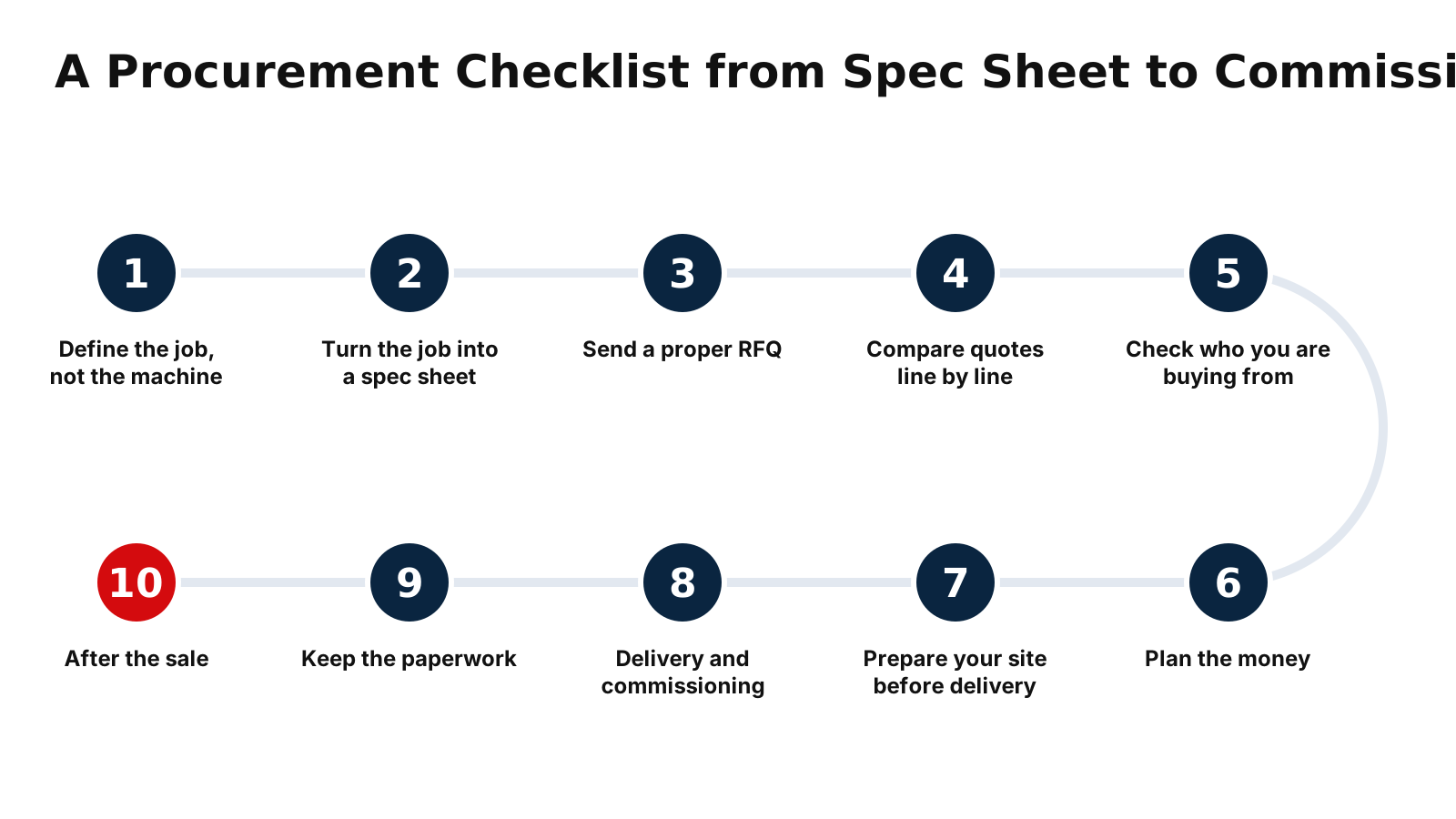
- Step 1: Define the Job, Not the Machine
- Step 2: Turn the Job Into a Spec Sheet
- Step 3: Send a Proper RFQ
- Step 4: Compare Quotes Line by Line
- Step 5: Check Who You Are Buying From
- Step 6: Plan the Money
- Step 7: Prepare Your Site Before Delivery
- Step 8: Delivery and Commissioning
- Step 9: Keep the Paperwork
- Step 10: After the Sale
- How Raney Machine Tools Works With Buyers
- FAQs
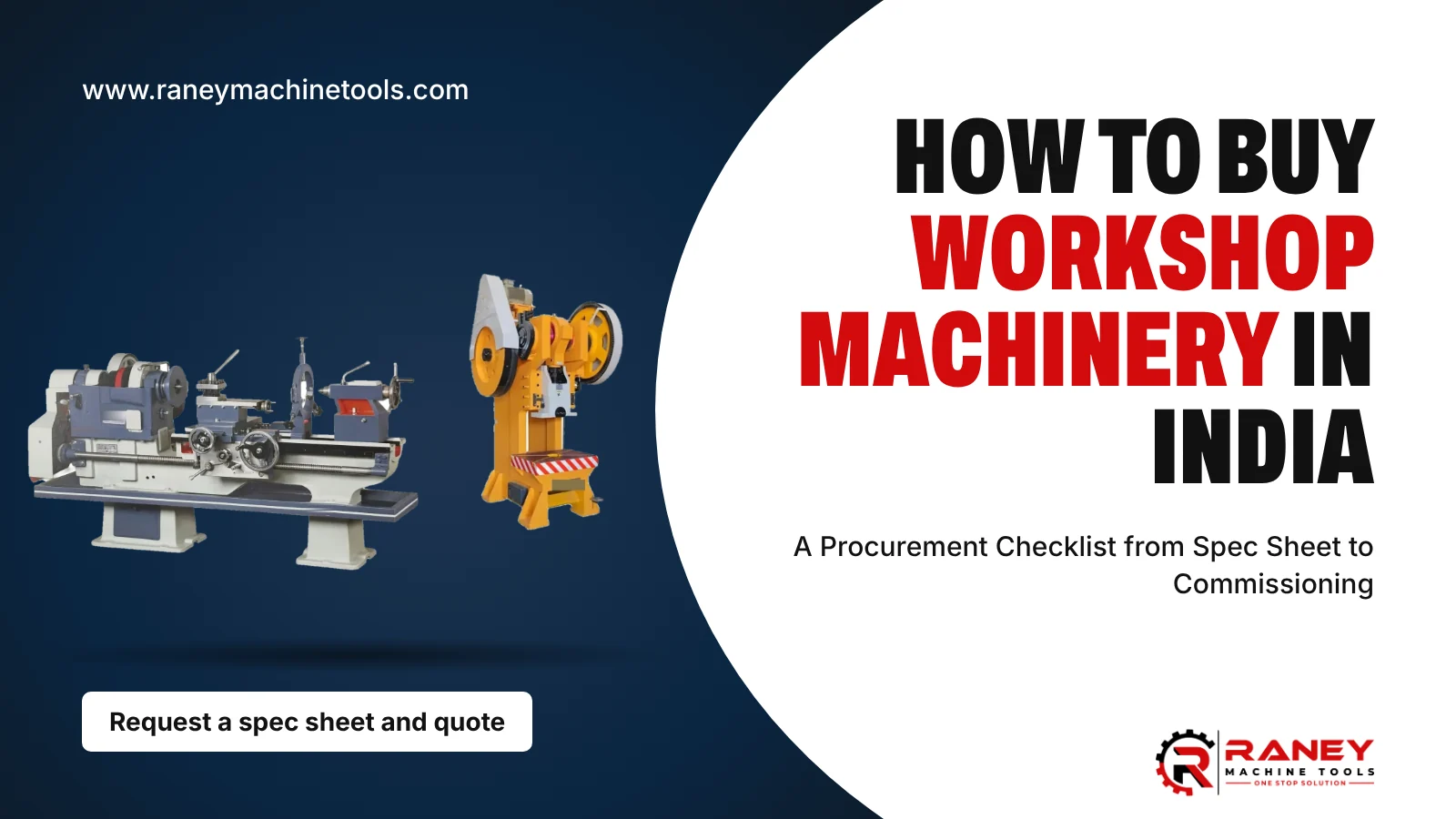
A machine tool is not a quick purchase. It will sit on your floor for fifteen or twenty years, and every part it makes will carry its accuracy, or its faults. Yet many machines are still bought on a phone call, a WhatsApp photo and the lowest number on a quotation.
Most problems we see after a purchase trace back to the buying process, not the machine. A spec that didn't match the job. A quote that left out GST, freight or commissioning. A foundation nobody planned. A supplier who disappeared when the first spare part was needed.
This guide is the checklist we would want every buyer to use, with us or with anyone else. It follows a purchase from the first requirement to a machine that is commissioned, accepted and supported. If you already know which machine you need, our category guides go deeper: lathes, power presses, air compressors, machine shop machines and fabrication equipment.
Step 1: Define the Job, Not the Machine
Start with what the machine must do, in numbers:
- The parts: largest and smallest sizes, weight, material, tolerance and finish
- The volume: pieces per day or month, now and in two to three years
- The operations: turning, drilling, punching, welding, grinding
- The operators: skilled machinists, or newer staff who need simpler controls
- The constraints: floor space, crane access, power supply, budget
A requirement like "need a 6 feet lathe" leads to quotes for very different machines. A requirement like "turn EN8 shafts up to 60 mm diameter and 1,200 mm long, 200 pieces a month, to 0.02 mm" leads to quotes you can actually compare.
Step 2: Turn the Job Into a Spec Sheet
Translate the job into the specifications that matter for that machine type. For example:
| Machine | Key specs to fix |
|---|---|
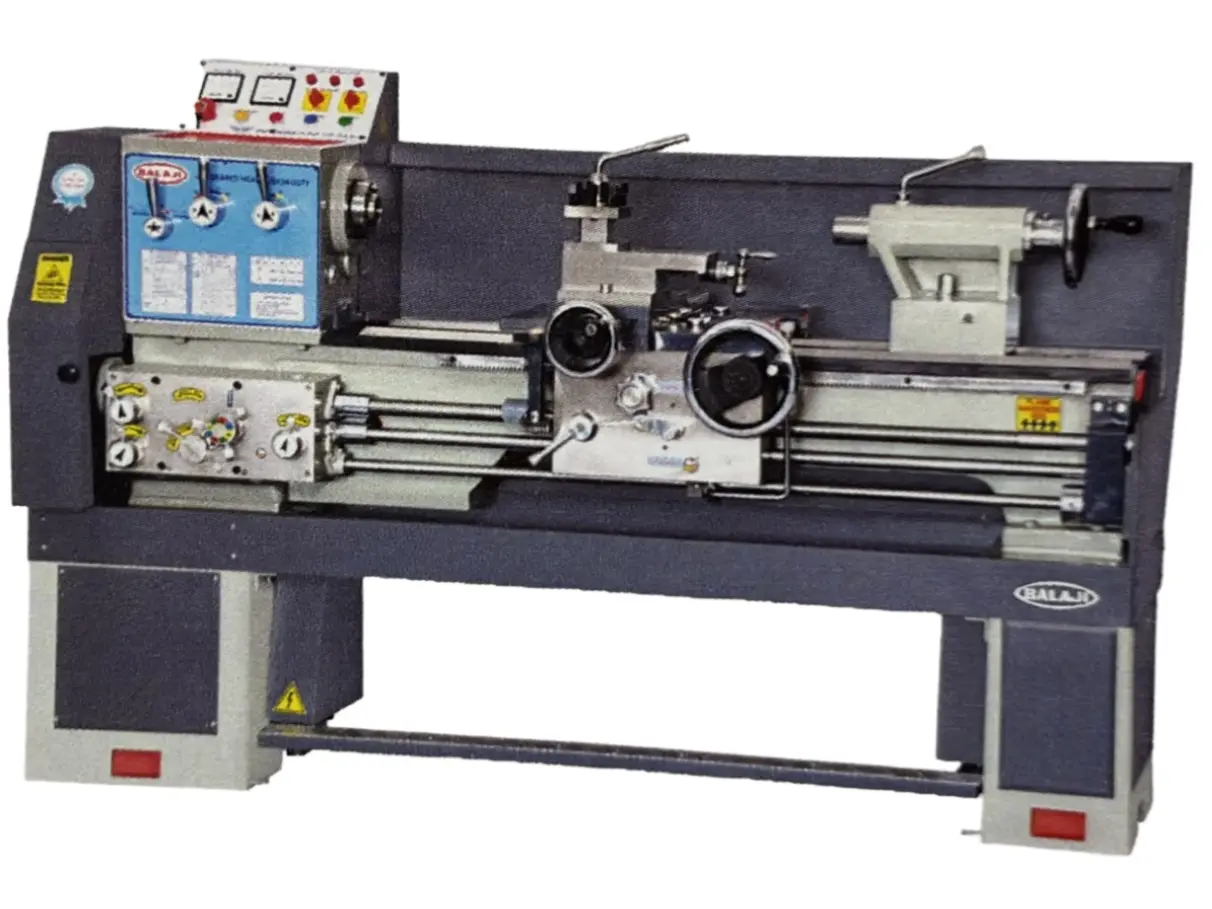
| Lathe | Swing over bed, admit between centres, spindle bore, drive type, speed range, motor |
| Drill | Capacity in steel, spindle-to-column reach, spindle taper, speed range |
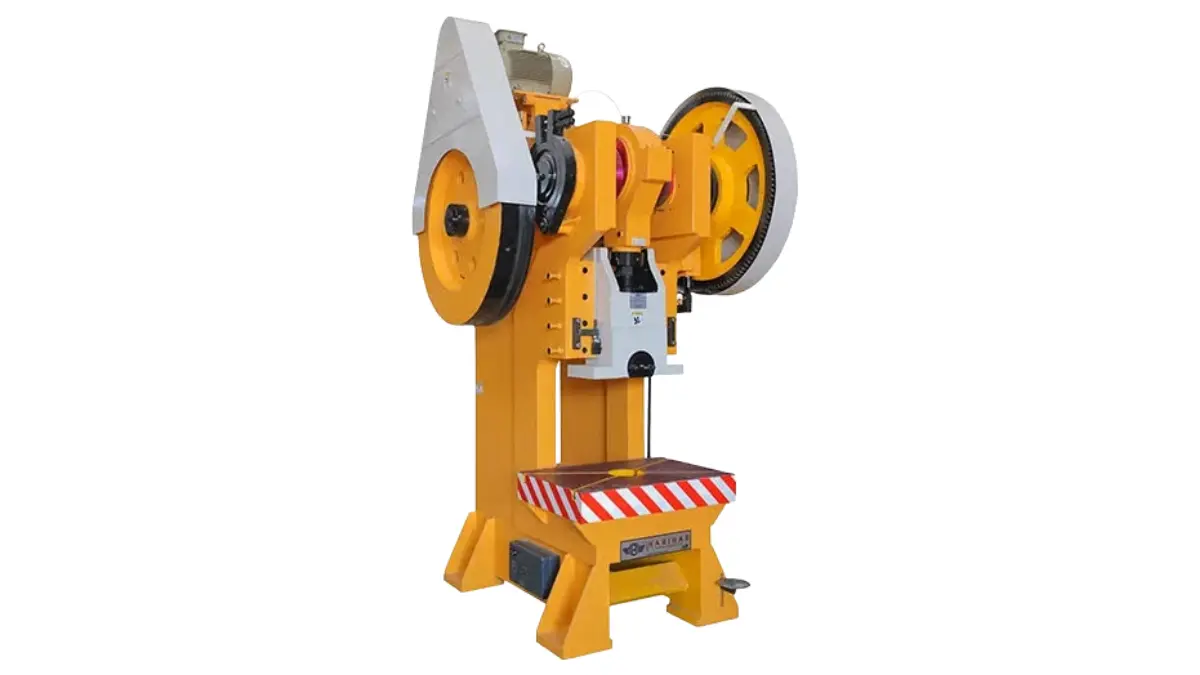
| Power press | Tonnage, stroke, shut height, bed size, strokes per minute |
| Air compressor | Free air delivery at working pressure, maximum pressure, tank size, stage |
| Welding machine | Process, current range, duty cycle, input supply |
| Surface grinder | Table size, feed type (manual, servo, hydraulic), accuracy |
Swipe the table sideways to see every column →
Allow sensible headroom (we suggest 15 to 20 percent on size for most machine tools) without paying for capacity you will never use.
Step 3: Send a Proper RFQ
A Request for Quotation should be in writing and the same for every supplier. Include:
- Your company name, GSTIN, delivery address and contact person
- The machine type and the spec sheet from Step 2
- Standard and optional accessories you need
- Whether you need delivery, installation, commissioning and foundation drawings
- Warranty and service expectations
- Required delivery date
- Payment terms you can offer
- Price basis: ask for the machine, accessories, GST, freight and commissioning as separate lines
Step 4: Compare Quotes Line by Line
Put every quote in one table, one row per item. The cheapest total is often not the cheapest machine.
| Check | Why it matters |
|---|---|
| Does the machine match the spec exactly? | A lighter class, smaller bore or lower tonnage often explains a lower price |
| Which accessories are included? | Chucks, tool posts, vices, coolant and dressers add up |
| Is GST included, and is the HSN code shown? | Affects the real price and your input tax credit |
| Freight, loading and unloading? | Heavy machines need cranes or hydras at both ends |
| Installation and commissioning? | Who levels, aligns and tests the machine |
| Foundation drawing? | Heavy machines need a designed foundation |
| Warranty: how long, what is covered, who services it? | A warranty with no local service is worth little |
| Spares: availability and lead time? | Downtime costs more than most spares |
| Delivery time? | Stocked machines ship faster than made-to-order |
Swipe the table sideways to see every column →
For GST and HSN details, see our guide to HSN codes and GST rates for workshop machinery.
Step 5: Check Who You Are Buying From
Workshop machinery in India is sold by manufacturers, authorized distributors and traders. They are not the same, and the difference shows up years after the sale.
| Authorized distributor | Unauthorised trader or reseller | |
|---|---|---|
| Relationship with the manufacturer | Appointed officially to sell and support the brand | None, or informal |
| Warranty | Manufacturer's warranty, honoured through the distributor | Often unclear, or the trader's own promise |
| Genuine spares | Direct access | Uncertain; parts may be copies |
| Service | Trained, coordinated with the manufacturer | Depends on the individual |
| Stock | Usually holds stock of popular models | Often sources after the order |
Swipe the table sideways to see every column →
Questions worth asking any supplier:
- Are you authorised by the manufacturer for this model? Can you show it?
- Who handles warranty claims, and how fast?
- Can I speak to two or three of your existing customers?
- Is this machine in stock? Can I see it running?
- How long have you been supplying machines in this region?
We are an Authorized Distributor: we sell only the brands we represent officially, with the manufacturer's warranty and genuine spares. You can read more about us, including the companies we have supplied since 1983.
Step 6: Plan the Money
Many businesses finance machinery through a term loan. Collateral-free MSME loans under CGTMSE, the Gujarat government's capital subsidy and PMEGP for new units can reduce the burden.
Also consider whether a new machine or a used one makes more sense for you over five years, not just on the day of purchase.
Step 7: Prepare Your Site Before Delivery
Don't let a machine arrive at a site that isn't ready. Before dispatch:
- Foundation: ask the supplier for the foundation drawing and get it built and cured in time
- Power: confirm phase, voltage, sanctioned load, cable size, starter and earthing
- Access: check the gate width, floor strength and the route to the machine's position
- Lifting: arrange a crane or hydra for unloading, and slings rated for the weight
- Utilities: compressed air, coolant and lighting where needed
- Space: room for the operator, material handling and maintenance access
Step 8: Delivery and Commissioning
When the machine arrives:
- Check the packing and the machine for transit damage before signing the delivery note. Photograph anything doubtful.
- Check the accessories against the invoice and packing list.
- Install on the foundation, level and grout as specified.
- Commission: the supplier's team should run the machine through its functions and check alignments.
- Run a test on your own part. This is the real acceptance test. Check the dimensions and finish you specified.
- Make sure your operators have been shown the controls, safety devices and daily checks.
Step 9: Keep the Paperwork
File these together, physically and digitally:
- Purchase order, quotation and tax invoice (with HSN code and GST)
- Delivery note and transport documents
- Warranty card and terms
- Operating and maintenance manual, lubrication chart
- Test and commissioning report
- Foundation drawing
- Supplier service contact details
You will need them for warranty claims, insurance, loan disbursement, subsidy claims and, one day, resale.
Step 10: After the Sale
A machine's real cost includes its downtime. Set up:
- A daily, weekly and monthly maintenance routine, written up and kept at the machine
- A list of fast-wearing spares to keep on the shelf
- A named contact at your supplier for service
Our team responds within 48 hours for service, spares and warranty coordination on machines we supply.
How Raney Machine Tools Works With Buyers
We have supplied workshop machinery from Ahmedabad since 1983. It has been our privilege to supply companies such as L&T, Anchor by Panasonic, ITT, Mazda, Monte Carlo, Lubi and BOMAFA, alongside small and medium workshops across Gujarat. We also export to 5 countries (Sri Lanka, Bahrain, Oman, UAE and Saudi Arabia), with the same documentation and support our customers in India receive.
- Authorized Distributor for the brands we represent, with the manufacturer's warranty and genuine spares
- Stock of popular models at our Ahmedabad showroom, so you can see and test before you buy
- Clear quotations with the machine, accessories, GST, delivery and commissioning shown separately
- Service within 48 hours for alignment, spares and warranty coordination
Frequently Asked Questions
How do I buy machinery for my workshop in India?
Define the job in numbers, turn it into a spec sheet, send the same written RFQ to several suppliers, compare quotes line by line (including GST, freight, commissioning, warranty and spares), check the supplier's authorisation and references, prepare your site, and accept the machine only after testing it on your own part.
What is the difference between an authorized distributor and a dealer?
An authorized distributor is appointed by the manufacturer to sell and support its machines, with the manufacturer's warranty and access to genuine spares. An unauthorised trader may sell the same model without that backing, which can leave you without warranty support or genuine parts.
What should a machinery quotation include?
The machine model and full specification, included accessories, price before GST, GST rate and HSN code, freight, installation and commissioning, foundation details, warranty terms, delivery time and payment terms, each shown clearly.
How long does delivery of workshop machinery take?
Machines held in stock can often ship within days to a couple of weeks; made-to-order or heavy machines can take several weeks. For example, our standard lathes in stock usually ship within 7 to 10 working days, while custom or heavy duty configurations can take 3 to 6 weeks.
What documents should I keep after buying a machine?
The purchase order, tax invoice with HSN code, delivery note, warranty card, manuals, commissioning report and foundation drawing. You will need them for warranty, insurance, loans, subsidy claims and resale.
Start With a Clear Requirement
Send us your job details or your spec sheet. We will recommend the right machine, send a clear quotation with every line shown separately, and invite you to see it at our showroom.
Browse our full workshop machinery range, or call or WhatsApp us on +91 70410 38728. Our showroom at 1/A, Ramnesh Estate, Opp. Shilp Arcade, Memco-Bapunagar Road, Ahmedabad is open Monday to Saturday, 9 am to 7 pm.

- Start hereHow to Buy Workshop Machinery in India: A Procurement Checklist from Spec Sheet to CommissioningYou are here
- GuideHSN Codes and GST Rates for Workshop Machinery (Lathe, Drill, Press, Compressor and More)
2 more guides coming in this series.